

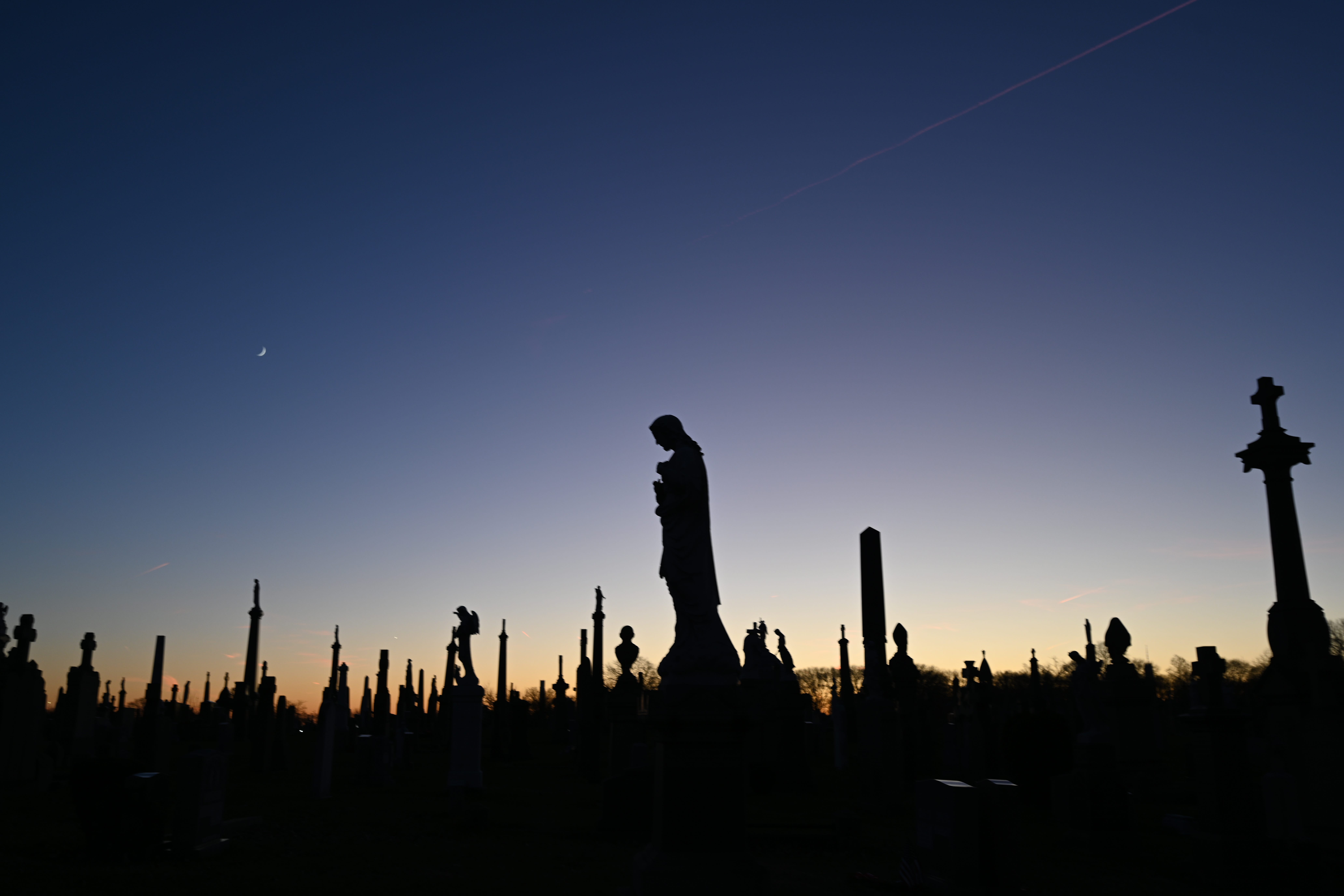
The first time I encountered death, I was ten years old.
My aunt had cancer. She was sixty years old, which seemed very old to me at the time but which I now know is not. She lived in Syracuse, New York and I lived in Queens, but I would write to her. She’d send me letters and cards and gifts in the mail.
Her death changed me. For the first time in my life, I’d actually experienced how someone could be there, be real, be a part of your life, however small, and then be gone. Just not exist anymore, or at least, not in a way that you can see them.
The viewing of her body was jarring. It was the first time I’d ever seen one, and her family had chosen to do it humbly. She was dressed in a nightgown, minimal makeup. Sometimes at wakes corpses are dressed to the nines, makeup caked on, to the point where they have this uncanny-valley quality to them that kind of dissociates you from what you’re looking at. She was a corpse. Much like the entire experience of her loss, the truth was laid bare in front of me. I think it was fitting.
I cried an embarrassing amount at her funeral. I dedicated stories to her afterwards. Had bad dreams. I missed my aunt—missed writing to her, speaking on the phone, going to her house in Syracuse with the spare room full of Holly Hobbie decorations, but more than that, I was shaken to the absolute core that she could be gone.
It was the first time I had mourned, and it marked the end of my childhood. I imagine this is the same for many people.
Only children don’t mourn. Little humans live in a blissful state where their summers feel like years and school years feel like lifetimes, and their friends are always their friends and everything that they have seems like all they’ll ever have and all they’ll ever need.
There are tragedies, of course. Kids who lose parents young. For most, though, ignorance of mourning is the childish innocence that we miss when we feel nostalgic: the one where we were completely at peace, when everything seemed like forever and nothing seemed to be missing.
It’s not always death that changes this. It could be a divorce, a move, a graduation. Every nostalgia is a kind of mourning—looking back and realizing that one’s life is different than it used to be, and the knowledge that comes with it that the life you’re living now, for better or for worse, will also one day be a memory.
The thing with mourning is that it consumes us for a time, and then we kind of erase it from our minds. We shove it to the back of our minds and go back to the headspace we need to function in which we naively assume that everything will last. I think that’s why people hate change so much—it shatters this illusion.
This is the part of a piece of writing where I’d like to make some sweeping generalization, some ‘moral of the story.’ But there really isn’t one.
It’s just a thought, which, like most things, ends abruptly.
Thank you for reading.
You have this magical way of placing my own consciousness into every story you write. It's uncanny, as in with "Plastic Gods." Like a good movie, you make me forget I'm reading (I actually listen due to terrible eyesight) and transport me into the scene or person. This time you evoked a memory about death when I asked my parents why some trees had no leaves. When told the trees had 'died' it put me in a days-long period of sad bewilderment. I remember the moment clearly.
Beautiful. Thank you.